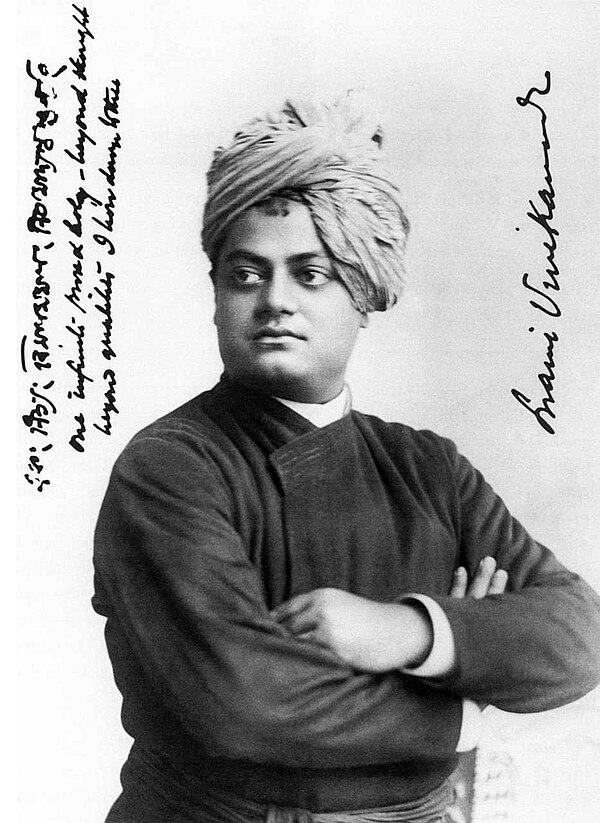
The Heart of Knowledge: A Journey Beyond Books
Swami Vivekananda's assertion that "knowledge is not found in books alone; it is found in the heart" invites us to reconsider the nature of wisdom and understanding. This statement challenges the conventional view that knowledge is merely an accumulation of facts and figures, suggesting instead that true insight arises from a deeper, more personal engagement with life. In an age where information is abundant and easily accessible, this perspective is particularly relevant, urging us to seek wisdom not just through study, but through experience and emotional resonance.
By emphasizing the heart as a vessel for knowledge, Vivekananda points to the importance of intuition, empathy, and personal experience in the quest for truth. This approach encourages a holistic understanding of knowledge, one that integrates intellect with emotion and spirit. In doing so, it calls upon us to cultivate a deeper awareness of our inner lives and the world around us, recognizing that the most profound insights often emerge from our lived experiences rather than from the pages of a book.
The image / the metaphor
The imagery in Vivekananda's quote evokes a rich tapestry of understanding that transcends the mere act of reading. The heart symbolizes not only emotion but also a deeper consciousness, a space where knowledge is felt and understood on a visceral level. The verb "found" suggests an active pursuit, a journey rather than a passive reception of information. This metaphor invites us to explore the depths of our own being, where knowledge is not just learned but experienced, resonating within us as a living truth.
Diving deeper into this metaphor, we can see that the heart represents a sanctuary of wisdom, a place where the intellect and the emotional self converge. It is here that we can access a form of knowledge that is often overlooked in academic settings—a wisdom that is intuitive, compassionate, and deeply personal. This understanding encourages us to embrace our feelings and experiences as valid sources of knowledge, reminding us that the heart's insights can illuminate paths that the mind alone may not discern.
In the speaker's tradition
Swami Vivekananda's teachings are deeply rooted in the rich tradition of Hindu philosophy, where concepts such as dharma, bhakti, and prajna play pivotal roles. Dharma, or the moral order of the universe, emphasizes the importance of living in accordance with one's true nature, which can only be fully understood through the heart's wisdom. Bhakti, the path of devotion, further illustrates this connection, suggesting that love and surrender to a higher power can lead to profound insights that transcend intellectual understanding. In this context, knowledge becomes a dynamic interplay between the heart and the divine, where true wisdom is revealed through love and devotion.
In the Bhagavad Gita, a foundational text of Hindu philosophy, we find echoes of Vivekananda's sentiment. The Gita emphasizes the importance of inner knowledge and self-realization, urging individuals to look beyond the external world and seek the truth within. This aligns with Vivekananda's assertion that the heart is a crucial source of knowledge, as it is through self-awareness and introspection that we can access the deeper truths of existence. The Gita teaches that wisdom is not merely an intellectual pursuit but a transformative journey that requires both the heart and mind to engage fully.
Living the teaching
Consider a modern scenario where this teaching can be applied: a student preparing for exams. In the rush to memorize facts and figures, they may overlook the importance of understanding the material on a deeper level. By taking time to reflect on how the subject matter relates to their own experiences and feelings, they can transform rote learning into a meaningful exploration of knowledge. This approach not only enhances retention but also fosters a genuine connection to the material, allowing the student to engage with it in a way that resonates with their heart.
Another application of this teaching can be found in relationships, particularly during moments of conflict. When disagreements arise, it is easy to become entrenched in our positions, relying solely on logical arguments. However, if we approach the situation with an open heart, seeking to understand the emotions and experiences of the other person, we can uncover deeper truths that may lead to resolution and healing. This practice of empathetic listening and emotional engagement transforms conflict into an opportunity for growth and connection, illustrating how knowledge gained through the heart can enrich our relationships.
A reflection
As we contemplate Vivekananda's profound assertion, we are invited to reflect on our own relationship with knowledge. How often do we seek understanding solely through external sources, neglecting the wisdom that resides within us? In what ways can we cultivate a deeper connection to our own hearts, allowing our experiences and emotions to guide us toward greater truths? This contemplation encourages us to embrace the journey of knowledge as a holistic endeavor, one that harmonizes the intellect with the heart.




Join the BrightStar Community
Stay connected with daily inspiration, event announcements, and community wisdom